


 Downloader
 Free FTP
US$ 99.5 Billion Milestone: Global Biostimulants Market Outlook 2036
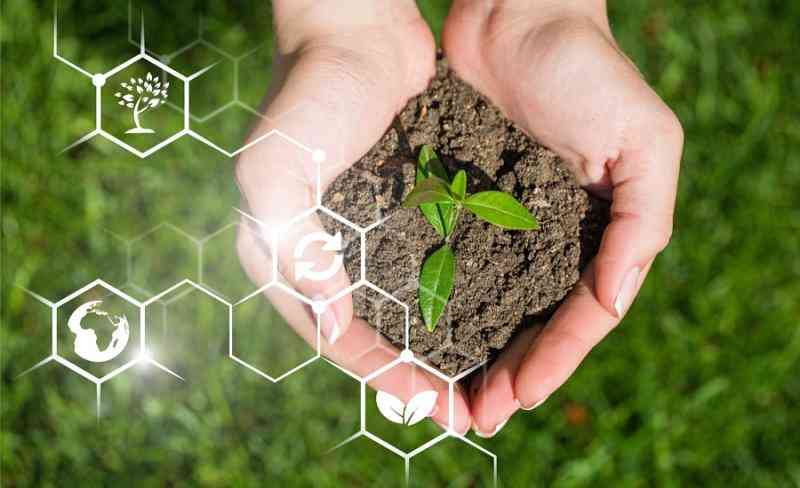
The global biostimulants market is currently at an inflection point, transitioning from "alternative" supplements to essential components of modern regenerative agriculture. Unlike fertilizers, which provide nutrients, biostimulants trigger a plant’s natural physiological processes—enhancing nutrient efficiency, abiotic stress tolerance, and overall crop quality. As chemical fertilizer runoff and soil degradation become central to global environmental policy, biostimulants have emerged as a primary solution for "climate-smart" farming.
The global biostimulants market size was valued at US$ 36.3 Billion in 2025 and is projected to reach US$ 99.5 Billion by 2036, expanding at a high-velocity CAGR of 9.6% from 2026 to 2036.
- Market Drivers: The Shift to Regenerative Systems
The trajectory toward US$ 99.5 Billion is driven by a massive reconfiguration of agricultural inputs:
- Abiotic Stress Management: With extreme weather events—drought, salinity, and heat waves—becoming more frequent, biostimulants are being utilized as "biological insurance." They help crops maintain photosynthesis and cellular function even under severe environmental pressure.
- Regulatory "Green" Mandates: Policy frameworks like the EU’s "Farm to Fork" strategy and North American soil health initiatives are placing caps on synthetic nitrogen and phosphorus use. Biostimulants allow farmers to maintain high yields while reducing their total chemical footprint.
- Consumer Demand for Organic/Residue-Free Food: As global consumers prioritize health and sustainability, the demand for biostimulants has surged, as they leave no chemical residues on produce, unlike many traditional pesticides and fertilizers.
- Technological Evolution: Precision Biology and Omics
By 2036, the industry has moved past "secret formulas" to scientifically validated, precision-targeted biological tools.
- Microbial Consortiums: Innovation is shifting from single-strain products to complex microbial consortiums—blends of bacteria and fungi that work synergistically to colonize the root zone, effectively creating a "living shield" for the plant.
- Advanced Extraction (Seaweed & Humic Substances): In 2025, Humic and Fulvic acids held the largest market share (approx. 44%). By 2036, advanced cold-press and fermentation extraction methods for seaweed (like Ascophyllum nodosum) are delivering higher concentrations of active signaling molecules, increasing efficacy by up to 30%.
- Integration with Precision Ag: 2036 models of biostimulants are being integrated into data-driven systems. Satellite and drone data now dictate the exact timing of biostimulant application—typically during a plant’s "critical growth stages"—to maximize metabolic response.
- Key Market Segments: Acids, Microbes, and Row Crops
The market is defined by a preference for versatile, high-absorption application methods:
- Active Ingredients:
- Acid-based (Humic/Fulvic): The dominant segment, valued for its ability to improve soil structure and cation exchange.
- Seaweed Extracts: The fastest-growing ingredient segment due to its high concentration of natural growth hormones (cytokinins and auxins).
- Microbial Amendments: Rapidly gaining traction as "bio-fertilizer" alternatives.
- Mode of Application: Foliar treatment remains the market leader (approx. 80% share in some regions) due to its rapid absorption and easy integration with existing spray systems.
- Crop Type: While fruits and vegetables are high-value consumers, Row Crops (Cereals & Grains) have become the largest volume segment as large-scale corn, wheat, and soybean farmers adopt biostimulants to achieve marginal yield gains on vast acreages.
- Regional Outlook: Europe’s Lead and APAC’s Acceleration
- Europe (Market Leader): Held the largest revenue share in 2025 (40%). The region remains the global standard-setter for biostimulant regulations (CE marking) and leads in the transition to organic farming practices.
- Asia-Pacific (The Growth Engine): Projected to record the highest CAGR through 2036 (approx. 11.8%). Driven by India and China, the region is scaling biostimulant use to restore soil health in heavily over-fertilized regions and to secure food supply for its growing populations.
- Latin America: A dominant market for large-scale "biologicals" in soybean and sugarcane production, with Brazil emerging as a global hub for microbial R&D.
Conclusion: The Biological Backbone of Agriculture
Reaching a valuation of US$ 99.5 Billion by 2036 signifies that biostimulants are no longer an "optional" addition to a farmer's toolkit. In the coming decade, they will serve as the biological backbone of a global food system that must produce more with less. The successful companies of 2036—such as Syngenta Biologicals, BASF, Novozymes, and UPL—will be those that offer transparent, data-backed products that prove their ROI in every field.

 English
 Arabic
 French
 Spanish
 Portuguese
 Deutsch
 Dutch
Dutch
 Italiano
 Russian
 Romaian
 Portuguese (Brazil)
 Greek
Greek
