


 Downloader
 Free FTP
Hyssop Herb: Ancient Remedy with Modern Health Potential
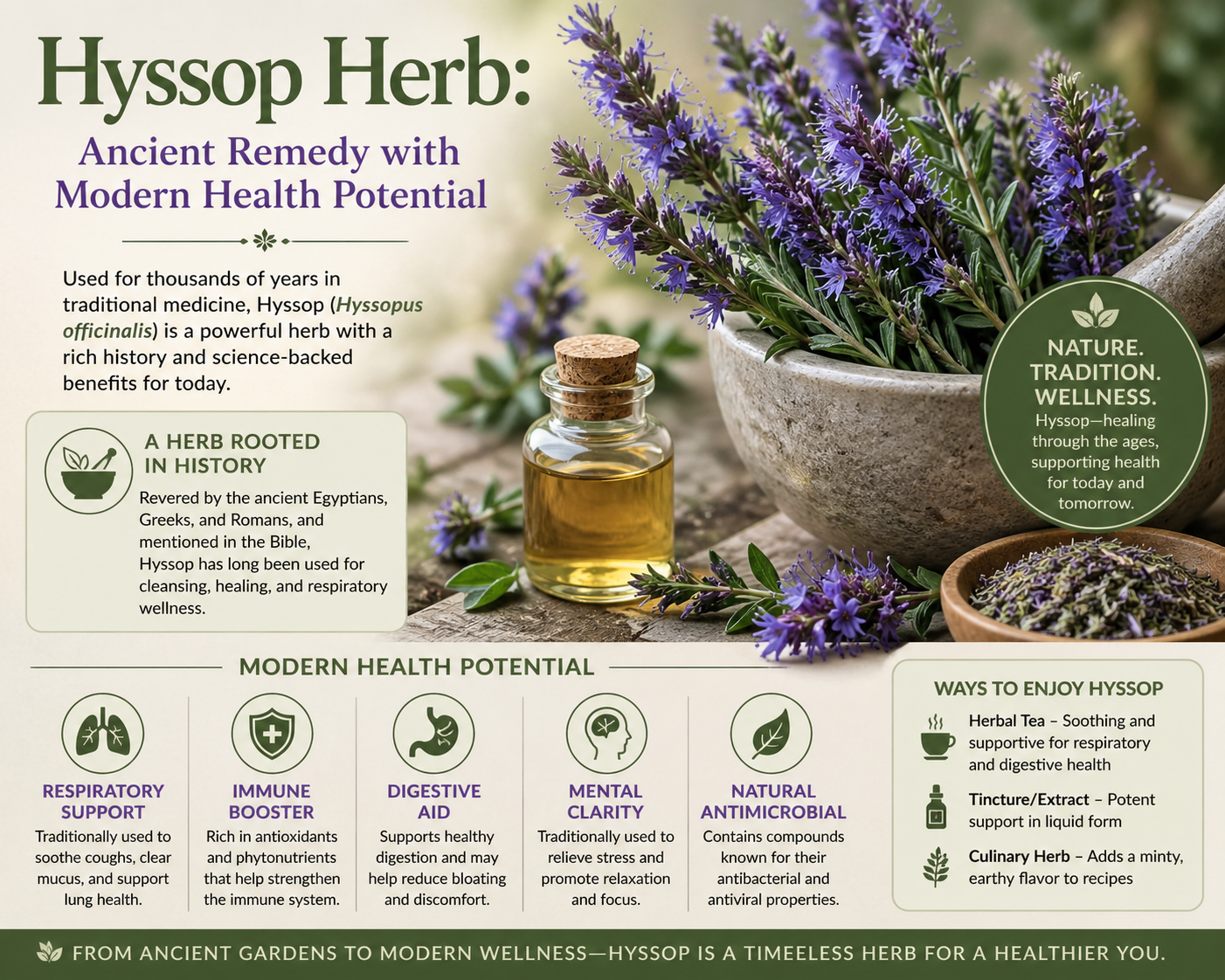
Hyssopus officinalis, also known as Hyssop, is a herb that is part of the mint family. It has a history of being used in medicines, cooking, and perfumes for ages. It produces small blue flowers and is famous for having a minty smell. People in ancient times used this herb in their teas and also as remedies for respiratory and digestive issues. At present, continuous research is going on to find out about its benefits to make it a part of medicine. This small herb is more than just a cooking ingredient and is valuable for numerous health benefits. In this article, we will examine all the Hyssop benefits.
Rich in Antioxidants
Hyssop is particularly valuable for being rich in antioxidants. This herb contains a high amount of flavonoids, which are natural compounds acting as antioxidants. These antioxidants play a very important role in neutralizing free radicals that can be harmful to the body.
Antioxidants also have the ability to reduce the chances of serious health issues like heart disease, stroke, and cataracts. Thus, if one includes an antioxidant-rich hyssop in their diet, they can reduce the chances of such diseases.
Supports Respiratory Health
One of the most important Hyssop benefits is its ability to ease respiratory problems, which include cough, cold, and asthma. There are some compounds in the plant that help in opening the airways, thus allowing a person to breathe better. This happens because of a chemical called pinocamphone, which loosens mucus and improves airflow. Although it has immense benefits for respiratory problems, it should not replace prescribed medicines, especially for serious problems like asthma.
May Help Reduce Inflammation
As per the research, Hyssop contains anti-inflammatory properties, and since inflammation is responsible for many health issues like arthritis, diabetes, and heart issues, adding Hyssop to diets can help in preventing such issues. However, this research has been conducted on animal bodies; further study is required in this direction.
Potential Protection Against Ulcers
Hyssop benefits also include preventing digestive issues. It contains compounds that are associated with the formation of stomach ulcers. By preventing such harmful processes, Hyssop is valuable for reducing the chances of ulcers, thus eventually improving gut health. However, it should be included in diets only in small amounts.
Possible Role in Cancer Prevention
Being rich in antioxidants, Hyssop also has the ability to prevent cancer. The antioxidants are capable of protecting the cells from damage, thus protecting against abnormal growth. This certainly does not mean that Hyssop can cure cancer; it simply means that the antioxidants can lower the chances of cancer cells forming.
Conclusion
Although Hyssop has numerous health benefits, it comes with its own risks. It can cause side effects like bloating, stomach discomfort, or other allergic reactions linked to the mint family. It can also lead to other serious problems like seizures. Pregnant women should especially avoid consuming this, as it can cause uterine contractions.
Thus, like every other herb, it also has its risks. Although no dose is proven to be good, it is always beneficial to consume it in small amounts. It is, however, best to discuss it with a professional healthcare expert before consuming this.
Source: Abodelook

 English
 Arabic
 French
 Spanish
 Portuguese
 Deutsch
 Turkish
 Dutch
Dutch
 Italiano
 Russian
 Portuguese (Brazil)
 Greek
Greek
