Growing Demand for Battery Recycling in India
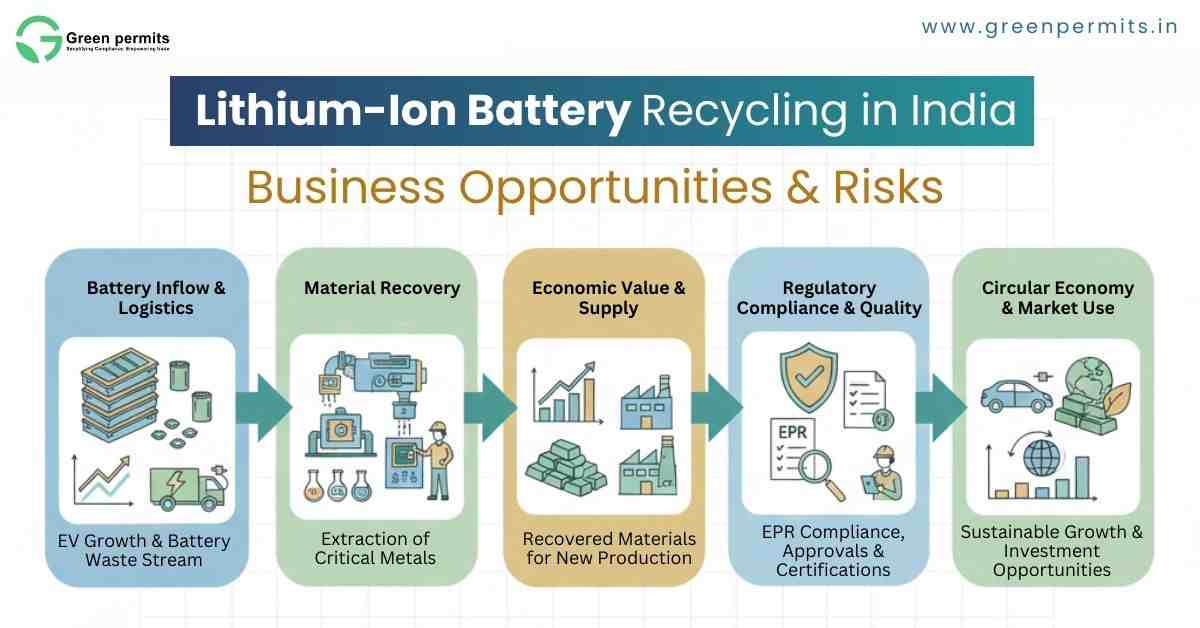
India is witnessing rapid growth in electric vehicles, renewable energy storage systems, and consumer electronics. This expansion has significantly increased the amount of battery waste generated across the country. Managing this waste responsibly has become critical because batteries contain hazardous substances along with valuable metals.
Battery recycling enables the recovery of important materials such as lithium, cobalt, nickel, copper, and lead, which can be reused in new manufacturing processes. This reduces the dependency on mining raw materials and supports India's transition toward a circular economy. As sustainability becomes a national priority, battery recycling is emerging as a high-potential industry for entrepreneurs and investors.
Regulations and Compliance for Battery Recycling Plants
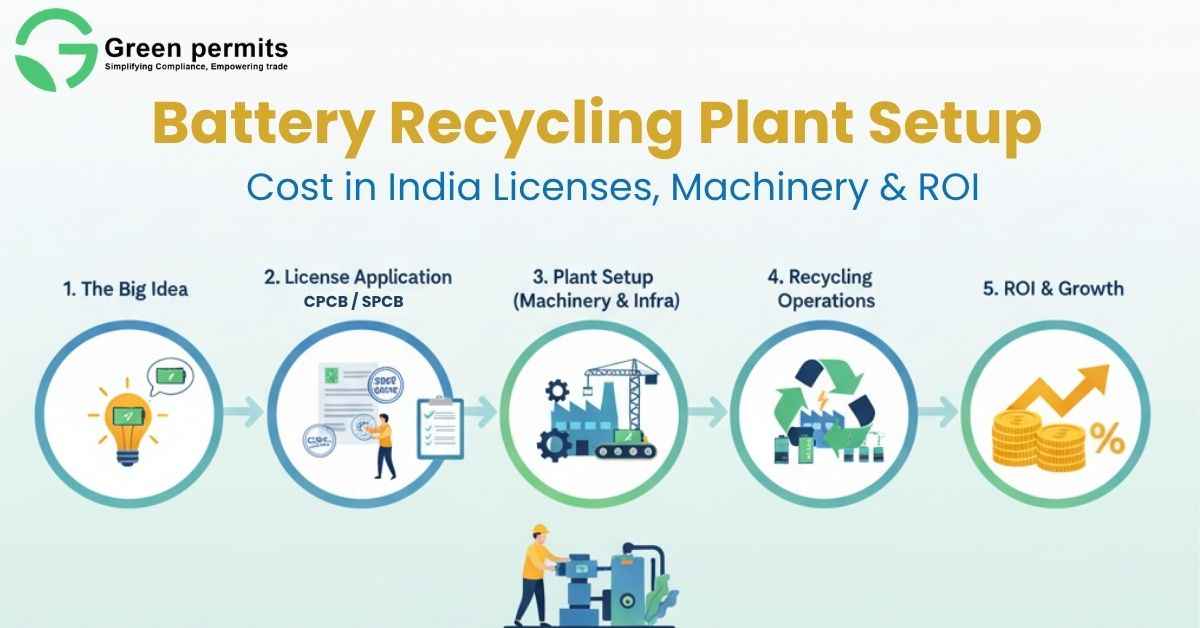
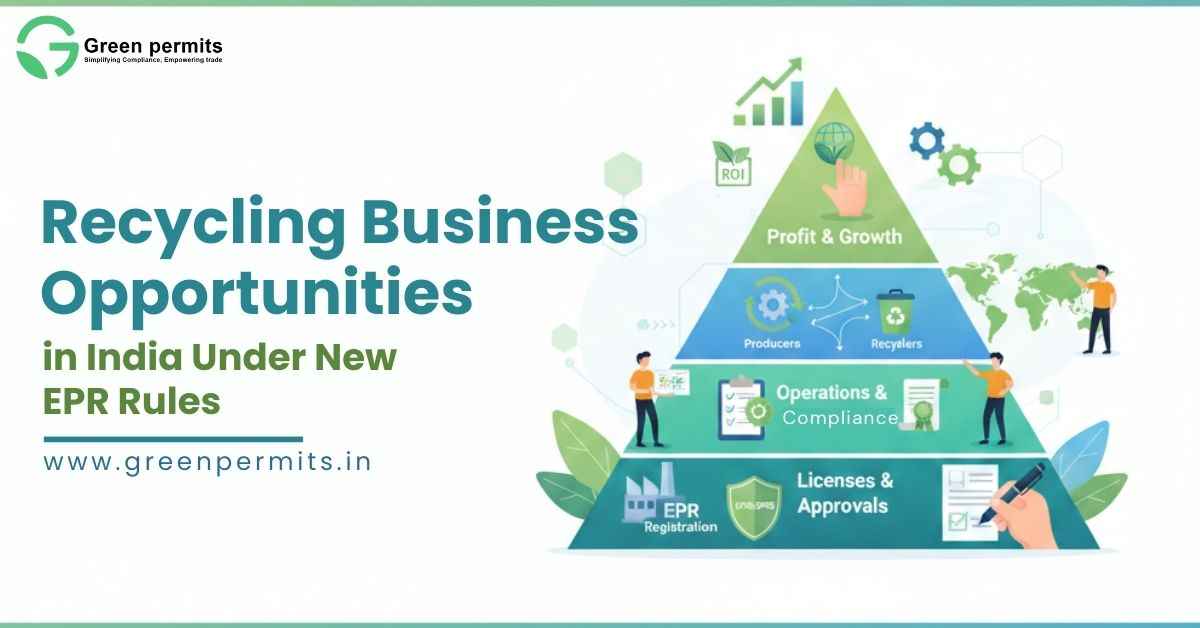
Setting up a battery recycling plant in India requires compliance with environmental regulations issued by the government. Businesses must follow the Battery Waste Management Rules and register under the Extended Producer Responsibility (EPR) framework on the CPCB portal.
Entities involved in battery manufacturing, importing, recycling, or refurbishing must ensure proper collection, recycling, and reporting of battery waste. Approvals from the State Pollution Control Board (SPCB) along with environmental authorizations and pollution control systems are required before starting operations.
Following these regulatory requirements ensures environmentally sound recycling practices and protects both public health and the environment.
Investment and Machinery Required for a Recycling Plant
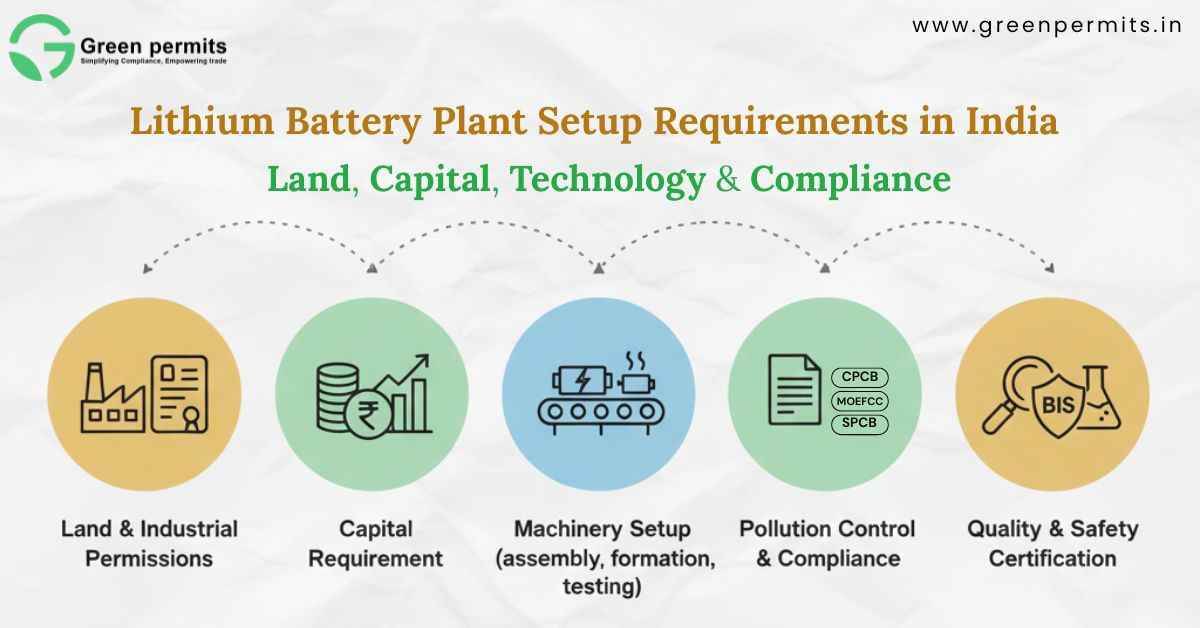
A battery recycling plant requires investment in land, infrastructure, and specialized recycling technology. Facilities typically include equipment for battery dismantling, material separation, chemical processing, and recovery of reusable metals.
The total investment depends on the plant capacity, battery chemistry handled (such as lithium-ion or lead-acid), and the level of automation used in the recycling process. Businesses must also allocate budget for environmental compliance systems, safety infrastructure, and trained technical manpower.
With proper planning and technology, recovered metals and recycled materials can create strong revenue streams, making battery recycling a sustainable and profitable business opportunity.
Learn the Complete Cost, Licenses & ROI
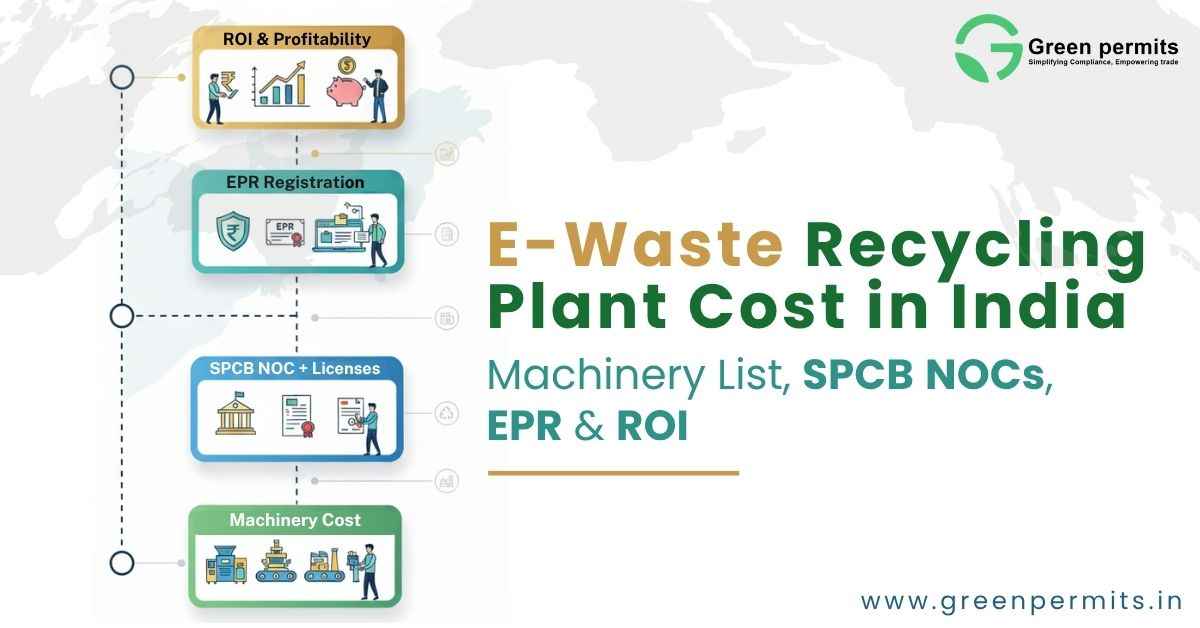
If you are planning to start a recycling facility, understanding the plant setup cost, required licenses, machinery, and expected return on investment is essential before launching the project.
Read the complete guide here:
👉
https://www.greenpermits.in/battery-recycling-plant-cost-in-india-licenses-machinery-roi/
📞 Start Your Battery Recycling Project with Expert Guidance
If you need assistance with battery recycling plant setup, CPCB registration, EPR compliance, or environmental approvals, the experts at Green Permits Consulting can guide you through the entire process.
🌐 Website:
https://www.greenpermits.in
📞 Phone: +91 78350 06182
📧 Email:
[email protected]
Book a Consultation with Green Permits today and start your recycling business with complete regulatory compliance.
Growing Demand for Battery Recycling in India
India is witnessing rapid growth in electric vehicles, renewable energy storage systems, and consumer electronics. This expansion has significantly increased the amount of battery waste generated across the country. Managing this waste responsibly has become critical because batteries contain hazardous substances along with valuable metals.
Battery recycling enables the recovery of important materials such as lithium, cobalt, nickel, copper, and lead, which can be reused in new manufacturing processes. This reduces the dependency on mining raw materials and supports India's transition toward a circular economy. As sustainability becomes a national priority, battery recycling is emerging as a high-potential industry for entrepreneurs and investors.
Regulations and Compliance for Battery Recycling Plants
Setting up a battery recycling plant in India requires compliance with environmental regulations issued by the government. Businesses must follow the Battery Waste Management Rules and register under the Extended Producer Responsibility (EPR) framework on the CPCB portal.
Entities involved in battery manufacturing, importing, recycling, or refurbishing must ensure proper collection, recycling, and reporting of battery waste. Approvals from the State Pollution Control Board (SPCB) along with environmental authorizations and pollution control systems are required before starting operations.
Following these regulatory requirements ensures environmentally sound recycling practices and protects both public health and the environment.
Investment and Machinery Required for a Recycling Plant
A battery recycling plant requires investment in land, infrastructure, and specialized recycling technology. Facilities typically include equipment for battery dismantling, material separation, chemical processing, and recovery of reusable metals.
The total investment depends on the plant capacity, battery chemistry handled (such as lithium-ion or lead-acid), and the level of automation used in the recycling process. Businesses must also allocate budget for environmental compliance systems, safety infrastructure, and trained technical manpower.
With proper planning and technology, recovered metals and recycled materials can create strong revenue streams, making battery recycling a sustainable and profitable business opportunity.
Learn the Complete Cost, Licenses & ROI
If you are planning to start a recycling facility, understanding the plant setup cost, required licenses, machinery, and expected return on investment is essential before launching the project.
Read the complete guide here:
👉 https://www.greenpermits.in/battery-recycling-plant-cost-in-india-licenses-machinery-roi/
📞 Start Your Battery Recycling Project with Expert Guidance
If you need assistance with battery recycling plant setup, CPCB registration, EPR compliance, or environmental approvals, the experts at Green Permits Consulting can guide you through the entire process.
🌐 Website: https://www.greenpermits.in
📞 Phone: +91 78350 06182
📧 Email:
[email protected]
Book a Consultation with Green Permits today and start your recycling business with complete regulatory compliance.




 Downloader
 Free FTP

 English
 Arabic
 French
 Spanish
 Portuguese
 Deutsch
 Turkish
 Italiano
 Russian
 Romaian
 Portuguese (Brazil)
 Greek
Greek
