


 Downloader
 Free FTP
Why So Many Tor Search Links Are Dead
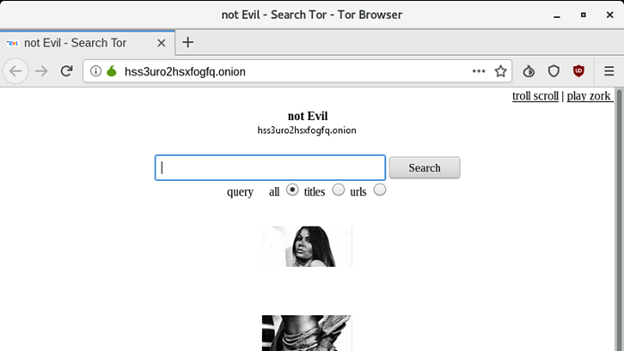
Did you know that over eighty percent of onion domains created today will likely vanish within forty eight hours? This staggering turnover rate makes navigating the deep web feel like trying to hit a moving target while wearing a blindfold. If you have ever clicked through a directory only to meet a "site unreachable" error, you are experiencing the standard reality of an ecosystem built on temporary connections. Compared to the visible internet where websites stay active for decades, the anonymous web is a area of constant shifts and sudden disappearances.
The core of this issue lies in how the network functions - You are accessing a system where servers are often just personal computers running in bedrooms or small offices. Because these connections are not always professional grade, they drop frequently. You are not dealing with massive data centers that have backup power and constant cooling. When a provider turns off their laptop or loses their home internet connection, the link you saved yesterday becomes a dead end - this lack of permanent infrastructure is the primary reason your bookmarks rarely stay valid for long.
Understanding the Volatile Nature of Tor
Tor is a system that prioritizes your privacy over the speed or reliability of your connection. To keep users anonymous, the network bounces your data through three different layers of encryption - this process is slow but the hosting side is even more complex. When a site owner sets up an onion address, they are essentially creating a secret tunnel. If any part of that tunnel collapses, the address stops working immediately. You can find a background on privacy tools that explains these routing mechanics in more detail.
The addresses themselves are another factor in why links die. Version 3 onion addresses are long strings of fifty six characters - these are not easy to remember and they are often generated for temporary projects. Many developers launch a site for a specific task and then delete the keys once the job is finished. Because there is no central registry like a phone book, no one updates the public directories when a site goes dark. You are essentially looking at an old map of a city that changes its streets every night.
The Technical Burden of Hidden Services
Running a hidden service is a heavy task for any standard computer. You might notice that even active sites load at a crawl - this happens because the server must handle the heavy lifting of multiple encryption layers for every single visitor. Many small scale sites simply crash under the pressure of too many users. When a site becomes popular, it often goes offline because the hardware cannot keep up with the demand - this creates a cycle where the most interesting links are often the first ones to break.
Physical location also plays a role in link stability - Many servers are in regions with poor digital infrastructure. You might be trying to reach a site hosted on a connection that is naturally unstable. Common reasons for the technical failures include
- Sudden power outages at the host's physical location.
- Internet service providers blocking unusual encrypted traffic.
- Hardware failure on aging laptops used as servers.
- Software bugs in the hidden service configuration.
Security Measures & Legal Pressures
Safety is a major concern for anyone operating in this space. Site owners are often paranoid about being discovered, even if they are not doing anything wrong. If a server administrator detects a suspicious login attempt or a potential vulnerability, they will often "pull the plug" instantly. They would rather take the site down forever than risk a security breach - this "burn after reading" mentality is a core part of the culture, leading to thousands of abandoned links that once led to active forums or libraries.
Legal actions also play a significant role in the disappearance of links. While many people use the network for privacy and free speech, law enforcement agencies actively monitor and shut down nodes that host prohibited material. When a major hosting provider is taken offline by authorities, hundreds of smaller sites that relied on that host disappear at the same moment. You are seeing the aftermath of digital raids every time a link fails to load - this creates a high turnover where only the most resilient and well funded sites survive for more than a few months.
Effective Ways to Find Active Resources
To navigate this environment successfully, you need to change how you search. Relying on a static list of links from a year ago is a waste of your time. You should use specialized search tools that crawl the network in real time - these tools check if a site is online before showing it to you. For instance, an overview of Tor network systems and specific search engines can help you filter out the "zombie" links that no longer exist.
Community-driven directories are usually more reliable than static blogs. Look for platforms where users can "vote" on links or report them as down - these live updates are the only way to keep up with the rapid changes of the hidden web. You can also follow these tips to improve your experience
- Check the "last seen" timestamp on any directory you use.
- Use multiple search engines to verify if a site is truly gone or just slow.
- Avoid bookmarking deep pages - stick to the main landing page of a service.
- Be patient and try a link at different times of the day, as hosts may be in different time zones.
The deep web is not a broken version of the internet - it is simply a different type of network. It is built for those who value secrecy over convenience. While the high number of dead links is frustrating, it is actually a sign that the privacy protections are working. The same features that make a site hard for you to find also make it hard for unwanted observers to track. By understanding this trade off, you can navigate the hidden corners of the web with much more realistic expectations.
FAQ
Why do so many onion sites load so slowly?
Every request you make travels through three random relays around the world - this extra distance and the layers of encryption added at each stop slow down the connection significantly compared to normal browsing.
Are dead links a sign that I am being watched?
No, dead links are a standard part of the network's architecture. Many sites go down because of technical issues, lack of funding or the host simply deciding to stop the project.
How often should I update my list of Tor links?
You should treat every link as temporary - If you rely on a specific resource, check for a fresh mirror or address every few weeks, as most directories update their lists on a monthly basis.
Can a dead link ever come back online?
Yes, sometimes a host is just experiencing a temporary power outage or internet failure. If a site is important to you, it is worth trying the link again after twenty four hours before assuming it is gone forever.

 English
 Arabic
 French
 Spanish
 Portuguese
 Deutsch
 Turkish
 Dutch
Dutch
 Italiano
 Russian
 Romaian
 Portuguese (Brazil)
